
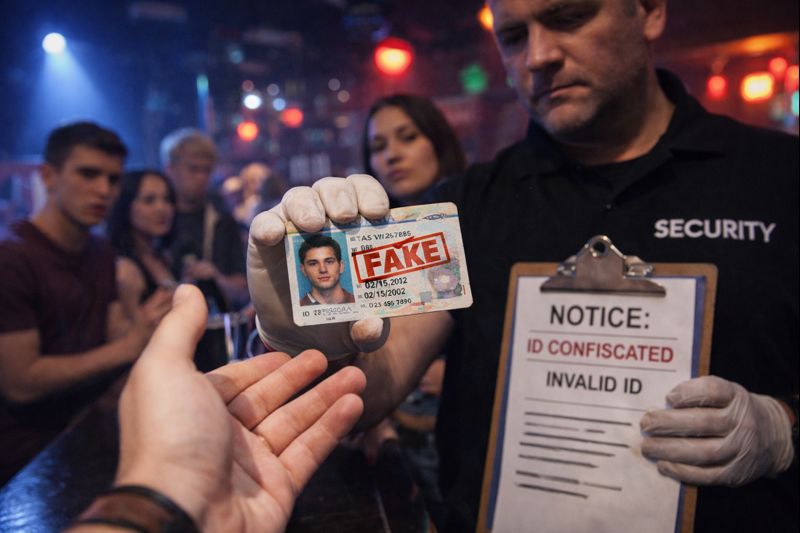
The Confiscation Process: What Venues Do with Seized Fake IDs
People search for fake ID confiscation because it is a common outcome at bars, concerts, and age-restricted venues. This guide explains why confiscations happen, what typically follows, and why the risks can extend beyond being turned away. It is informational only and not legal advice. For a broader look at how ID checks work across settings, visit the ID verification hub.
For a broader view of how staff verify documents, see how to spot fake IDs and how scanners fit into the process in digital ID checks. For a college-town example, see Springfield bar enforcement. For a Texas nightlife example, see how Dallas bars handle IDs.
What This Guide Covers
- Why venues confiscate or refuse IDs
- What usually happens in the moment
- Potential consequences beyond entry denial
- Legal alternatives and next steps
Why Venues Confiscate IDs
Venues face serious penalties if they serve minors. Staff are trained to watch for irregularities, and many businesses have policies that require holding a suspect ID or escalating to a manager. Even a single red flag can lead to a refusal or confiscation to protect the venue's license.
What Typically Happens During a Confiscation
Procedures vary by state and by venue. However, most situations follow a few common patterns.
- Entry or service is denied
- The ID is held by staff or a manager
- Security may ask you to leave the property
- Some venues contact law enforcement depending on policy
Can a Venue Keep a Fake ID?
Rules vary by state, and some jurisdictions allow or require businesses to turn suspect IDs over to law enforcement. Other places restrict what a private business can do. If you want a high-level view of underage drinking laws, see California penalty overview and Connecticut fake ID laws and risks for state-specific examples, and the CDC underage drinking fact sheet for background on why enforcement is strict.
Consequences Beyond Being Turned Away
Confiscation is often just the first step. Depending on the setting and local laws, people may face additional consequences that extend beyond the night. Travel settings can be stricter; see airport security consequences. For hotel-specific risks, see hotel check-in with a fake ID.
| Immediate Outcome | Possible Follow-Up |
| Denied entry or service | Missed event, travel disruption, or loss of reservation |
| Confiscation of the ID | Document held, reported, or turned over to authorities |
| Questioning by staff or security | Incident reports or law enforcement involvement |
For a wider look at legal and personal risk, read fake ID risks and alternatives and the legal classification overview in is having a fake ID a misdemeanor?
If Law Enforcement Gets Involved
When police are called, the situation can escalate quickly. Stay calm, follow instructions, and avoid making the situation worse. The ACLU Know Your Rights guide outlines general expectations during police interactions.
Safer, Legal Alternatives
If your goal is access or convenience, there are lawful options that do not carry the same risks. These alternatives reduce the chance of penalties or long-term fallout.
- State-issued non-driver IDs or passport cards
- 18+ events or venues that do not require 21+ entry
- Community and campus activities that avoid legal risk
Fake ID Confiscation FAQs
Is confiscation the same as a criminal charge?
FAQNo. Confiscation is not automatically a criminal charge, but it can lead to reports or further action depending on local laws and the situation.
Can a bar or venue legally take your ID?
FAQPolicies vary by state. Some venues are allowed to hold suspect IDs; others must turn them over to law enforcement. Check your state's rules for details.
What if it is a real ID that was mistakenly flagged?
FAQAsk for a manager and stay calm. If the venue believes the ID is suspect, they may still refuse entry. Follow any lawful instructions and avoid escalating the situation.
Does getting an ID back erase the risk?
FAQNot necessarily. Even if a document is returned, the incident can still be recorded or reported.
Reminder
This is general information, not legal advice. Laws and venue policies vary by location and change over time.