
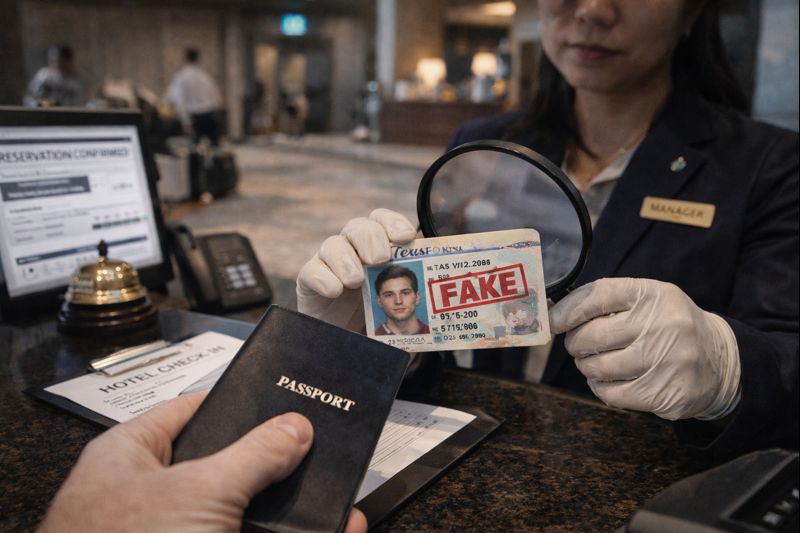
Hotel Check-In with a Fake ID: Red Flags and Potential Legal Trouble
Searches for fake ID at hotel check-in usually come from people trying to book a room under an age limit or avoid a policy restriction. Hotels verify identity for safety, payments, and liability, and a fake ID can trigger cancellations, lost deposits, or legal exposure. This guide is informational only and not legal advice. For a broader look at how ID checks work across settings, visit the ID verification hub.
For a broader view of the risks tied to counterfeit identification, read fake ID risks and alternatives and for travel-specific screening, see airport ID screening and how staff are trained to detect issues in how to spot fake IDs.
What This Guide Covers
- Why hotels ask for ID at check-in
- How verification works in person and online
- Common red flags that lead to denial
- Safer, legal alternatives to avoid trouble
Why Hotels Ask for ID
Hotel staff verify identity to confirm the reservation, match the name on the payment method, and protect the property. Many hotels also have age requirements for check-in, which is why ID review is part of the process. In practice, the goal is risk management, not just policy compliance.
How Hotel Verification Works
Check-in is usually a combination of visual inspection, system checks, and payment verification. A document that looks fine at a glance can still be flagged once details are compared to the reservation.
In-person front desk checks
- Name and date of birth matched to the reservation
- Photo comparison and basic document review
- Credit card and billing address confirmation
Digital check-in and remote verification
Many hotels now use online check-in or mobile key systems. These often include ID uploads, device verification, or payments that are rechecked at arrival. A mismatch can trigger manual review.
Why Fake IDs Get Flagged at Hotels
Hotels see a wide range of IDs, and staff are trained to notice inconsistencies. The most common issues are small data or formatting problems that do not match the reservation details. If a document is held, review the fake ID confiscation process.
- Name or date of birth does not match the booking
- Card looks altered or does not align with known formats
- Photo or physical features do not match the presenter
- Payment or billing information conflicts with the ID
What Can Happen If a Fake ID Is Detected
Outcomes vary by hotel and location, but the impact often goes beyond just being turned away.
| Immediate Outcome | Possible Follow-Up |
| Reservation canceled | Non-refundable charges or loss of deposit |
| Denied check-in | Disruption to travel plans and added costs |
| Document held or reported | Potential law enforcement involvement |
For the legal classification side of counterfeit ID possession, see is having a fake ID a misdemeanor?
Safer, Legal Alternatives
If the issue is age policy or name mismatches, a legal solution is the only reliable route. Hotels are often willing to clarify requirements in advance, which can save a lot of trouble.
- Use a valid government-issued ID or passport card
- Add an eligible adult to the reservation when required
- Call the hotel ahead of time to confirm check-in rules
For official information on legal ID options, see the U.S. Department of State passport card guidance. If you have concerns about identity theft or document misuse, the FTC identity theft resource and the FBI IC3 reporting center provide official next steps.
Fake ID at Hotel Check-In FAQs
Can a hotel keep your ID if they believe it is fake?
FAQPolicies vary by state and by property. Some will return it immediately, while others may report it or contact law enforcement.
Do hotels check ID for online reservations?
FAQYes. Online bookings still require ID at check-in, and mismatches can cause cancellation or denial.
Is it illegal to use a fake ID just to book a room?
FAQIn most jurisdictions, possession or use of counterfeit identification is illegal regardless of the setting.
What is the safest alternative if you are under the minimum age?
FAQChoose a property that allows under-21 check-in with an eligible adult or adjust travel plans to meet policy requirements.
Reminder
This content is for general information only. Laws and hotel policies vary by location and can change over time.