
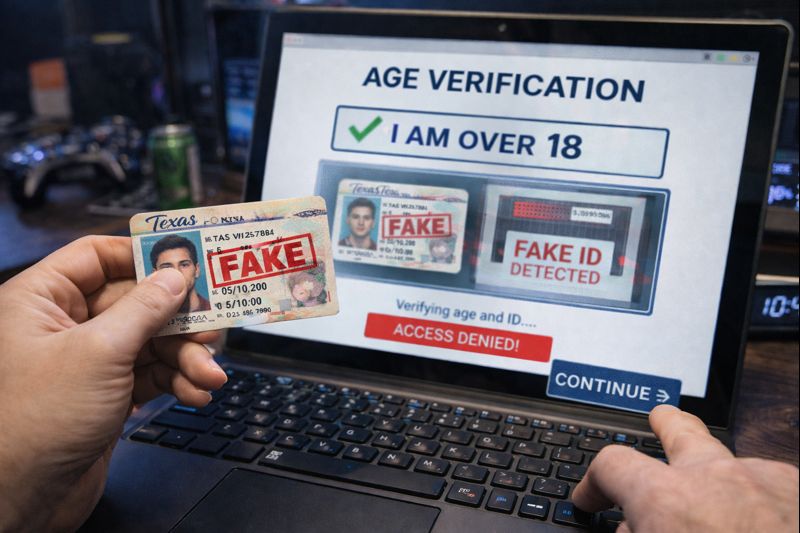
Why Fake IDs Fail Online: Digital Verification Risks and Consequences
Searches for fake ID for online age verification usually come from people trying to order something restricted or sign up for an age-gated service. The reality is that online checks are layered, and a fake ID can trigger account blocks, legal exposure, or identity theft. This guide is informational only and not legal advice. For a broader look at how ID checks work across settings, visit the ID verification hub.
If you are weighing the broader risks around fake IDs, review the risks and alternatives overview and how online scams commonly target buyers in fake ID website scams.
What This Guide Covers
- How online age checks actually work
- Why fake IDs get flagged in digital systems
- Legal and financial risks people overlook
- Safer, legal alternatives
How Online Age Checks Actually Work
Online verification is not a single gate. Platforms and retailers often combine multiple signals before approving an order or account. That can include identity checks at sign-up and again at delivery.
- Account information and date-of-birth validation
- Payment and billing data matching
- Third-party identity verification services
- Document upload or live selfie checks
- Delivery handoff review in age-restricted orders
For a technical background on identity proofing and verification, see the NIST digital identity guidelines.
Why Fake IDs Get Flagged Online
Digital checks compare data across systems. When details are inconsistent, many platforms trigger manual review or blocks. Even if an upload appears realistic, mismatched personal information is often enough to fail verification.
- Names or birth dates that do not match payment records
- Reuse of the same image across multiple accounts
- Device or IP patterns that indicate unusual activity
- Low-quality images or missing security features
In-person checks are still part of many workflows. Delivery drivers and staff are trained to compare the person to the ID, much like the manual checks outlined in how to spot fake IDs.
Risks Beyond Order Denial
The immediate outcome might be a canceled order, but the longer-term risks are bigger. Many people underestimate how a single attempt can affect accounts, records, or personal data security.
- Account bans or payment freezes
- Data exposure from untrusted sellers
- Potential criminal or civil penalties in some jurisdictions
- Identity theft or financial fraud downstream
The FTC provides guidance on protecting yourself from identity theft at identitytheft.gov.
Why Online Sellers Are a Separate Risk
Many fake ID sellers operate as scams, collecting payment and personal data without delivering anything. If you're focused on turnaround time and delivery delays, see the typical wait for fake IDs. If you are seeing claims about "verified" providers, read the provider scam breakdown for a clearer picture of how these schemes work.
Safer, Legal Alternatives
If the goal is access or convenience, legal options are safer and more reliable than trying to bypass age checks. This is especially true for alcohol delivery, nicotine products, and other regulated items.
- Use a valid, government-issued ID for age-restricted purchases
- Choose age-appropriate products or venues when under 21
- Plan ahead for a legal replacement if your ID is lost or expired
For health and policy context on underage drinking, see the CDC underage drinking fact sheet.
Fake ID for Online Age Verification FAQs
Can a fake ID pass online age verification?
FAQSome attempts may get past a single screen, but most platforms use multiple checks that can flag inconsistencies and trigger review or denial.
Is it illegal to use a fake ID online?
FAQIn most jurisdictions, possessing or using a fake ID is illegal regardless of whether the purchase is in person or online.
Why do online sellers ask for photos and personal data?
FAQMany sellers are scams. The data they request can be used for fraud, identity theft, or resale.
What is the safest alternative if you are underage?
FAQThe safest option is to avoid age-restricted purchases and choose legal alternatives until you are of age.
Reminder
This content is for general information only. Laws and enforcement vary by location, and penalties can be significant.